How AI Is Transforming Healthcare Around the World in 2026
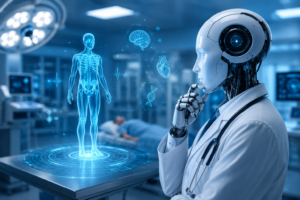
Artificial Intelligence (AI) is revolutionizing healthcare faster than ever before. Hospitals, clinics, pharmaceutical companies, and research institutions across the globe are adopting AI-powered technologies to improve patient care, accelerate diagnoses, reduce medical errors, and enhance operational efficiency.
In 2026, AI is no longer viewed as a futuristic concept—it has become an essential part of modern healthcare. From detecting diseases earlier to assisting surgeons during complex procedures, AI is helping healthcare professionals make better decisions while allowing patients to receive faster and more personalized treatment.
This article explores how AI is transforming healthcare around the world, the benefits it brings, current challenges, and what the future may hold for both medical professionals and patients.
Table of Contents
- What Is AI in Healthcare?
- AI for Early Disease Detection
- Medical Imaging and Diagnostics
- Personalized Medicine
- AI-Powered Drug Discovery
- Robotic Surgery
- Virtual Health Assistants
- AI in Hospital Management
- Challenges and Ethical Concerns
- The Future of AI in Healthcare
- Frequently Asked Questions
- Conclusion
What Is AI in Healthcare?
Artificial Intelligence in healthcare refers to computer systems that can analyze medical information, recognize patterns, learn from data, and assist healthcare professionals in making informed decisions. These systems use technologies such as machine learning, deep learning, natural language processing, and computer vision to improve various aspects of healthcare.
Unlike traditional software that follows fixed instructions, AI continuously improves as it processes more data. This ability enables healthcare providers to identify diseases more accurately, predict health risks, recommend treatments, and streamline administrative tasks.
Today, AI is being used in hospitals, diagnostic laboratories, pharmacies, insurance companies, telemedicine platforms, and medical research centers worldwide.
AI for Early Disease Detection
One of AI’s greatest strengths is its ability to detect diseases earlier than traditional methods. By analyzing thousands—or even millions—of medical records, laboratory results, and imaging scans, AI systems can identify subtle patterns that may be difficult for humans to notice.
Early detection is especially valuable for serious conditions such as cancer, heart disease, stroke, diabetes, and neurological disorders. Detecting these illnesses in their early stages often leads to more effective treatment and improved survival rates.
Benefits of AI in Early Detection
- Earlier diagnosis of chronic diseases
- Reduced medical errors
- Improved patient outcomes
- Faster clinical decision-making
- Lower long-term healthcare costs
Researchers continue to train AI models using large medical datasets, allowing these systems to become more accurate and reliable over time.
Medical Imaging and Diagnostics
Medical imaging is one of the areas where AI has made remarkable progress. Radiologists often analyze thousands of X-rays, CT scans, MRIs, ultrasounds, and mammograms. AI can assist by highlighting suspicious areas that deserve closer examination.
Rather than replacing radiologists, AI acts as a second set of eyes, helping specialists review scans more efficiently and reducing the likelihood of missed abnormalities.
Common Applications
- Detecting breast cancer from mammograms
- Identifying lung diseases from chest X-rays
- Recognizing brain abnormalities on MRI scans
- Analyzing heart conditions through medical imaging
- Supporting emergency diagnosis of stroke patients
By combining AI analysis with the expertise of healthcare professionals, hospitals can improve diagnostic accuracy while reducing the time patients wait for results.
Personalized Medicine
Every patient is unique, and AI is making it easier for healthcare providers to deliver treatments tailored to an individual’s needs. Instead of relying on a one-size-fits-all approach, AI analyzes medical history, genetics, lifestyle, laboratory results, and other health data to help doctors recommend personalized treatment plans.
This approach can improve treatment effectiveness while reducing the risk of side effects. Personalized medicine is becoming increasingly important in managing cancer, diabetes, cardiovascular diseases, and rare genetic disorders.
Advantages of Personalized Medicine
- Treatment plans tailored to individual patients
- More effective medication selection
- Reduced risk of adverse drug reactions
- Improved long-term health outcomes
- Better patient satisfaction and care
As healthcare providers gain access to more high-quality medical data, AI-powered personalized medicine is expected to become even more accurate in the coming years.
AI-Powered Drug Discovery
Developing a new medicine traditionally takes many years and requires significant financial investment. AI is helping pharmaceutical companies speed up this process by analyzing massive biological datasets, identifying promising drug candidates, and predicting how different compounds may interact with the human body.
Researchers can now evaluate thousands of potential drug combinations much faster than with conventional laboratory methods alone. This accelerates the development of treatments for diseases while reducing research costs.
How AI Supports Drug Development
- Identifying promising drug candidates
- Predicting possible side effects
- Accelerating clinical research
- Reducing research and development costs
- Supporting the discovery of treatments for rare diseases
Although AI significantly improves efficiency, every new medicine must still undergo rigorous laboratory testing, clinical trials, and regulatory approval before becoming available to patients.
Robotic Surgery
Robotic-assisted surgery has become increasingly common in hospitals worldwide. AI-powered robotic systems help surgeons perform delicate procedures with greater precision, flexibility, and control.
These systems do not replace surgeons. Instead, they provide advanced tools that assist during operations, helping improve accuracy while reducing the risk of complications.
Benefits of AI-Assisted Surgery
- Greater surgical precision
- Smaller incisions
- Reduced blood loss
- Lower risk of infection
- Faster patient recovery
- Shorter hospital stays
AI also assists surgeons before operations by analyzing medical scans and helping develop detailed surgical plans based on each patient’s condition.
Virtual Health Assistants
AI-powered virtual assistants are changing how patients interact with healthcare providers. Many hospitals and healthcare organizations now use intelligent chatbots and virtual assistants to answer common questions, schedule appointments, send medication reminders, and provide basic health information.
These digital assistants improve access to healthcare services while reducing the workload of medical staff, allowing professionals to spend more time caring for patients with complex needs.
Common Uses
- Appointment scheduling
- Medication reminders
- Health education
- Symptom guidance
- Post-treatment follow-up
While virtual assistants can provide helpful information, they should not replace consultations with qualified healthcare professionals when serious medical concerns arise.
AI in Hospital Management
Beyond patient care, AI is helping hospitals operate more efficiently. Healthcare facilities generate enormous amounts of administrative data every day, including patient records, appointment schedules, billing information, staffing plans, and inventory management.
AI systems can analyze this information to improve resource allocation, reduce waiting times, predict patient demand, and optimize staff scheduling. These improvements allow hospitals to provide better care while controlling operational costs.
Examples of AI in Hospital Operations
- Predicting patient admissions
- Optimizing staff schedules
- Managing hospital bed availability
- Automating medical documentation
- Reducing administrative workload
- Improving supply chain management
As healthcare systems continue to modernize, AI is expected to play an even greater role in helping hospitals deliver efficient, high-quality care to growing populations around the world.
Challenges and Ethical Concerns
Despite its many advantages, artificial intelligence is not without challenges. Healthcare organizations must ensure that AI systems are accurate, transparent, secure, and used responsibly. Since AI relies on large amounts of patient data, protecting privacy and maintaining public trust remain top priorities.
Medical professionals also emphasize that AI should support—not replace—human expertise. Doctors, nurses, and other healthcare providers continue to play an essential role in diagnosing illnesses, communicating with patients, and making critical treatment decisions.
Key Challenges
- Protecting patient privacy and sensitive medical data
- Reducing bias in AI algorithms
- Ensuring transparency in AI decision-making
- Meeting healthcare regulations and compliance standards
- Training healthcare professionals to use AI effectively
- Balancing innovation with ethical responsibility
Addressing these challenges will help healthcare organizations maximize the benefits of AI while minimizing potential risks.
The Future of AI in Healthcare
The future of AI in healthcare looks promising. Researchers are developing more advanced systems capable of supporting early diagnosis, predicting disease outbreaks, improving medical imaging, and assisting healthcare professionals in delivering more personalized care.
Wearable health devices, remote patient monitoring, and telemedicine platforms are also expected to become more intelligent through AI integration. These technologies will allow doctors to monitor patients continuously and identify potential health problems before they become serious.
Although AI will continue to evolve rapidly, successful healthcare systems will combine advanced technology with human expertise, compassion, and ethical medical practice.
Frequently Asked Questions (FAQs)
1. What is AI in healthcare?
AI in healthcare refers to the use of artificial intelligence technologies to analyze medical data, assist healthcare professionals, improve diagnoses, support treatment decisions, and enhance patient care.
2. Can AI replace doctors?
No. AI is designed to assist healthcare professionals by providing data-driven insights and improving efficiency. Medical decisions, patient communication, and complex treatments still require qualified healthcare providers.
3. How does AI improve disease detection?
AI analyzes large amounts of medical information, laboratory results, and imaging scans to identify patterns that may indicate diseases at an earlier stage, allowing for faster diagnosis and treatment.
4. Is AI making healthcare more affordable?
AI has the potential to reduce healthcare costs by improving efficiency, minimizing diagnostic errors, accelerating drug discovery, and automating administrative tasks. However, implementation costs and infrastructure investments remain significant.
5. What are the risks of using AI in healthcare?
Some challenges include data privacy concerns, algorithm bias, cybersecurity risks, and ensuring that AI recommendations remain accurate and transparent. Strong regulations and human oversight are essential.
6. What does the future hold for AI in healthcare?
Future developments may include more personalized treatments, smarter wearable devices, improved robotic surgery, faster drug development, predictive healthcare analytics, and expanded access to telemedicine services.
Conclusion
Artificial intelligence is transforming healthcare around the world by helping medical professionals diagnose diseases earlier, improve treatment plans, streamline hospital operations, and deliver more personalized patient care. While AI cannot replace the knowledge, experience, and compassion of healthcare professionals, it serves as a powerful tool that supports better clinical decisions and improves healthcare outcomes.
As technology continues to advance, responsible AI adoption will play an increasingly important role in shaping the future of medicine. Healthcare organizations that combine innovation with ethical practices, strong data protection, and human expertise will be best positioned to deliver safer, faster, and more effective care.
Whether through smarter diagnostics, AI-assisted surgeries, or accelerated medical research, artificial intelligence is helping create a healthcare system that is more efficient, accessible, and patient-centered for people around the world.
Final Thoughts
AI is no longer a technology of the future—it is already reshaping healthcare today. From hospitals and research laboratories to telemedicine platforms and wearable health devices, artificial intelligence is improving how diseases are detected, treated, and managed.
As governments, healthcare providers, and technology companies continue investing in AI innovation, patients can expect more personalized care, faster diagnoses, and improved access to medical services. The future of healthcare will not be driven by AI alone but by the successful collaboration between intelligent technology and skilled healthcare professionals.
About The Author