The Biggest AI Trends Shaping the Future in 2026
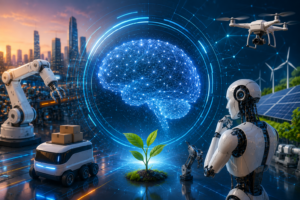
Artificial Intelligence (AI) continues to evolve at an incredible pace, transforming industries, changing how people work, and creating new opportunities for innovation. In 2026, AI is no longer limited to chatbots and image generators. Businesses, governments, healthcare providers, educators, and consumers are adopting increasingly intelligent systems that automate tasks, improve decision-making, and enhance everyday experiences.
From autonomous AI agents to multimodal AI models capable of understanding text, images, audio, and video simultaneously, the technology is becoming more powerful and accessible than ever before. Organizations that embrace these trends are positioning themselves to stay competitive in an increasingly digital world.
This guide explores the most significant AI trends shaping 2026, explaining how they work, why they matter, and what they could mean for businesses, professionals, and consumers in the years ahead.
Table of Contents
- Why AI Trends Matter
- Rise of AI Agents
- Multimodal AI
- Intelligent Automation
- AI and Robotics
- AI in Healthcare
- Future AI Trends
- Frequently Asked Questions
- Conclusion
Why AI Trends Matter
Understanding AI trends helps individuals and organizations prepare for technological change. Businesses can identify new opportunities to improve efficiency, while professionals can develop skills that remain valuable in an AI-driven economy.
Governments, educators, and technology companies also monitor AI developments to create policies, educational programs, and products that address future needs. Staying informed about emerging trends allows people to make better decisions about careers, investments, and digital transformation strategies.
1. The Rise of AI Agents
One of the biggest developments in 2026 is the rapid adoption of AI agents. Unlike traditional AI assistants that respond to individual prompts, AI agents can plan tasks, make decisions, execute multi-step workflows, and adapt based on results.
Businesses are increasingly using AI agents to manage customer support, automate administrative work, coordinate business processes, and improve operational efficiency. As these systems become more capable, they are expected to transform industries ranging from finance and healthcare to manufacturing and retail.
Why It Matters
- Automates repetitive workflows
- Reduces operational costs
- Improves productivity
- Supports better decision-making
- Operates continuously with minimal supervision
2. Multimodal AI Is Becoming the New Standard
Modern AI systems are increasingly capable of processing multiple types of information at the same time, including text, images, audio, video, and documents. This capability, known as multimodal AI, enables more natural and efficient interactions between humans and machines.
Instead of relying on separate tools for different tasks, users can upload documents, analyze charts, interpret images, summarize videos, or ask questions about visual content using a single AI system.
Benefits of Multimodal AI
- More accurate responses through multiple data sources.
- Improved accessibility for different users.
- Enhanced productivity across industries.
- Better support for education, healthcare, and business.
- More natural human-computer interaction.
3. Intelligent Automation Continues to Expand
Businesses are increasingly combining AI with automation technologies to streamline operations. Intelligent automation goes beyond simple repetitive tasks by enabling systems to analyze information, make decisions, and improve workflows with minimal human intervention.
Organizations are using intelligent automation for invoice processing, customer support, inventory management, human resources, cybersecurity monitoring, and financial reporting. This trend allows companies to improve efficiency while reducing operational costs and minimizing errors.
Industries Benefiting from Intelligent Automation
- Banking and finance
- Healthcare
- Manufacturing
- Retail and e-commerce
- Transportation and logistics
- Government services
4. AI and Robotics Are Working Together
The combination of artificial intelligence and robotics is transforming industries that rely on physical tasks. AI gives robots the ability to analyze their surroundings, recognize objects, make decisions, and adapt to changing environments with greater accuracy.
Modern AI-powered robots are being used in factories, hospitals, warehouses, farms, and even homes. They can assist with manufacturing, package deliveries, warehouse management, precision agriculture, and healthcare support.
Key Benefits
- Improved workplace safety.
- Greater manufacturing efficiency.
- Reduced production costs.
- Higher accuracy in repetitive tasks.
- 24/7 operational capability.
5. AI Is Revolutionizing Healthcare
Healthcare continues to be one of the industries benefiting the most from artificial intelligence. AI helps medical professionals analyze health records, support medical imaging, improve hospital operations, and accelerate scientific research.
Doctors are increasingly using AI-assisted tools to help identify diseases, monitor patients, and recommend treatment options. Researchers are also using AI to analyze vast datasets, helping speed up medical discoveries and improve healthcare outcomes.
Examples of AI in Healthcare
- Medical image analysis.
- Virtual health assistants.
- Hospital workflow optimization.
- Patient monitoring systems.
- Drug discovery research.
- Predictive healthcare analytics.
While AI provides valuable support, healthcare professionals remain responsible for clinical decisions and patient care.
6. AI Is Strengthening Cybersecurity
As cyber threats become more sophisticated, organizations are turning to AI to improve their security defenses. AI-powered cybersecurity systems can monitor networks, detect unusual behavior, identify potential attacks, and respond more quickly than traditional security tools.
Machine learning algorithms continuously analyze network activity, helping security teams detect malware, phishing attempts, ransomware, and unauthorized access before they cause significant damage.
Benefits for Cybersecurity
- Faster threat detection.
- Real-time network monitoring.
- Improved fraud prevention.
- Automated incident response.
- Reduced workload for security teams.
7. Sustainable AI Is Becoming a Priority
As AI models become more powerful, organizations are paying closer attention to their environmental impact. Training advanced AI systems can require significant computing resources and energy consumption.
Technology companies are investing in more energy-efficient hardware, optimized algorithms, and environmentally responsible data centers to reduce carbon emissions while maintaining high AI performance.
At the same time, AI itself is being used to support sustainability by improving energy management, monitoring climate data, optimizing transportation routes, and reducing waste across industries.
8. AI Is Transforming Creative Industries
Artificial intelligence is becoming an important tool for designers, writers, musicians, filmmakers, marketers, and content creators. Rather than replacing human creativity, AI is helping professionals work faster and explore new ideas.
Creative teams now use AI to generate design concepts, edit videos, create marketing content, develop advertising campaigns, produce music, and assist with brainstorming. Human creativity remains essential for originality, storytelling, and final decision-making.
Creative Applications
- Graphic design assistance.
- Video editing support.
- Content writing and editing.
- Music composition assistance.
- Marketing campaign development.
- Social media content creation.
As AI tools continue to improve, creative professionals who learn to work alongside AI are likely to gain a competitive advantage while maintaining their unique artistic vision.
What Could Be Next for AI Beyond 2026?
Artificial intelligence is expected to continue advancing at a remarkable pace. Future AI systems may become more capable of understanding complex instructions, collaborating with humans, and automating sophisticated workflows across industries.
Experts anticipate greater adoption of AI in healthcare, education, transportation, manufacturing, scientific research, and public services. Businesses are also expected to invest more in AI governance, cybersecurity, and responsible development to ensure these technologies are used safely and ethically.
As AI becomes more integrated into daily life, individuals who develop digital literacy and AI-related skills will be better prepared for future career opportunities and technological change.
Frequently Asked Questions (FAQs)
1. What is the biggest AI trend in 2026?
One of the most significant AI trends in 2026 is the growth of AI agents—intelligent systems capable of planning tasks, making decisions, and completing multi-step workflows with minimal human intervention.
2. Which industries are benefiting the most from AI?
Healthcare, finance, education, manufacturing, retail, transportation, agriculture, and cybersecurity are among the industries seeing major benefits from AI adoption.
3. Will AI replace human jobs?
AI is expected to automate certain repetitive tasks, but it is also creating new career opportunities. Many jobs are likely to evolve rather than disappear, with workers using AI to become more productive and efficient.
4. Why is multimodal AI important?
Multimodal AI can process different types of information—such as text, images, audio, and video—at the same time, making AI systems more capable, flexible, and useful in real-world applications.
5. How can businesses prepare for AI?
Businesses should invest in employee training, identify processes that can benefit from automation, adopt AI responsibly, and establish strong data privacy and cybersecurity practices.
6. What skills will be valuable in an AI-driven future?
Critical thinking, creativity, communication, problem-solving, data literacy, digital skills, and the ability to work effectively with AI tools are expected to remain highly valuable.
Conclusion
Artificial intelligence is no longer an emerging technology—it has become a driving force behind innovation across nearly every industry. From AI agents and intelligent automation to robotics, healthcare, cybersecurity, and creative industries, the trends shaping 2026 demonstrate how rapidly AI is changing the way people live and work.
While challenges such as privacy, ethics, security, and workforce adaptation remain important, responsible AI development offers enormous opportunities for businesses, governments, educators, and individuals. Organizations that embrace AI strategically while maintaining human oversight will be better positioned to succeed in an increasingly digital economy.
Keeping up with AI trends is no longer optional. Whether you are a student, entrepreneur, developer, or business leader, understanding these developments can help you make informed decisions and stay competitive in the years ahead.
Final Thoughts
The AI landscape will continue evolving beyond 2026, bringing new innovations, industries, and career opportunities. Rather than viewing artificial intelligence as a replacement for human talent, it is more accurate to see it as a powerful tool that enhances productivity, supports better decision-making, and encourages innovation.
Those who embrace continuous learning and adapt to these technological changes will be well-positioned to benefit from the next generation of AI-powered solutions.
About The Author