AI in Education: Benefits, Challenges, and the Future
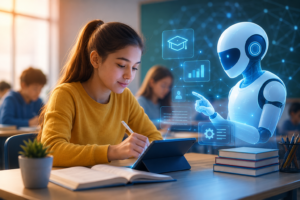
Artificial Intelligence (AI) is transforming education by changing the way students learn, teachers teach, and schools manage academic activities. From intelligent tutoring systems and personalized learning platforms to automated grading and virtual classrooms, AI has become one of the most influential technologies shaping modern education.
In 2026, educational institutions around the world are increasingly adopting AI-powered tools to improve learning outcomes, reduce administrative workloads, and provide students with more personalized educational experiences. As technology continues to evolve, AI is expected to play an even greater role in classrooms, universities, and online learning platforms.
This article explores how AI is transforming education, its key benefits, current challenges, practical applications, and what the future may hold for students, educators, and schools.
Table of Contents
- What Is AI in Education?
- Benefits of AI in Education
- Challenges of AI in Education
- How Teachers Are Using AI
- AI for Personalized Learning
- AI in Online Education
- The Future of AI in Education
- Frequently Asked Questions
- Conclusion
What Is AI in Education?
Artificial Intelligence in education refers to the use of intelligent computer systems that assist students, teachers, and educational institutions in delivering more effective and efficient learning experiences. These systems can analyze data, recognize learning patterns, automate repetitive tasks, and provide personalized recommendations based on each student’s progress.
Unlike traditional educational software, AI-powered platforms continuously improve as they process more information. This allows them to adapt lessons, identify learning gaps, recommend study materials, and provide instant feedback that helps students learn at their own pace.
Today, AI is being integrated into schools, colleges, universities, corporate training programs, and online learning platforms across the world.
Benefits of AI in Education
The adoption of AI offers numerous advantages for both students and educators. By automating routine tasks and providing personalized support, AI helps create a more engaging and efficient learning environment.
1. Personalized Learning
Every student learns differently. AI-powered learning platforms can analyze performance and adapt lessons based on individual strengths, weaknesses, and learning speed. This personalized approach helps students understand concepts more effectively without feeling left behind or overwhelmed.
2. Instant Feedback
AI systems can assess quizzes, assignments, and practice exercises within seconds. Immediate feedback allows students to identify mistakes quickly and improve their understanding before moving to more advanced topics.
3. Improved Student Engagement
Interactive AI tutors, educational chatbots, virtual simulations, and gamified learning experiences make studying more engaging. These tools encourage students to participate actively and stay motivated throughout their learning journey.
4. Reduced Administrative Work
Teachers spend considerable time grading assignments, preparing lesson materials, tracking attendance, and managing student records. AI can automate many of these repetitive tasks, allowing educators to focus more on teaching and mentoring students.
5. Better Accessibility
AI-powered translation tools, speech recognition, text-to-speech technology, and accessibility features help students with different learning needs or disabilities access educational content more easily.
Challenges of AI in Education
Despite its many advantages, AI also presents several challenges that schools, teachers, parents, and policymakers must address carefully.
Data Privacy
Educational platforms often collect personal information and learning data. Protecting this information is essential to maintain student privacy and comply with data protection regulations.
Digital Divide
Not every student has access to reliable internet connections, modern devices, or AI-powered learning platforms. This digital divide can create unequal learning opportunities between different communities and regions.
Academic Integrity
As AI becomes more capable of generating essays, solving problems, and answering questions, educators must develop clear guidelines that encourage students to use AI responsibly without compromising academic honesty.
Teacher Training
Successfully integrating AI into education requires teachers to understand how these tools work and how they can be used effectively in the classroom. Ongoing professional development will remain an important part of AI adoption.
How Teachers Are Using AI
Artificial Intelligence is becoming a valuable assistant for educators rather than a replacement for teachers. By automating routine tasks and providing useful insights, AI allows teachers to dedicate more time to classroom interaction, lesson planning, and supporting individual students.
Many schools and universities now use AI-powered platforms to simplify administrative work, monitor student progress, and deliver personalized educational experiences.
Common Ways Teachers Use AI
- Creating lesson plans and classroom activities
- Grading quizzes and assignments automatically
- Tracking student performance and attendance
- Identifying students who may need additional support
- Generating educational resources and practice questions
- Providing personalized feedback more efficiently
These tools help reduce workloads while allowing teachers to focus on developing students’ critical thinking, creativity, and problem-solving skills.
AI for Personalized Learning
One of the greatest strengths of AI in education is its ability to personalize learning. Traditional classrooms often require teachers to deliver the same lesson to many students with different learning styles and abilities. AI helps address this challenge by adapting educational content to each learner.
AI systems can evaluate quiz results, assignment performance, and study habits to recommend learning materials that match each student’s needs. Students who struggle with certain topics can receive additional explanations and practice exercises, while advanced learners can move ahead without unnecessary delays.
Benefits of Personalized Learning
- Learning at an individual pace
- Customized study recommendations
- Improved knowledge retention
- Higher student confidence
- Greater motivation and engagement
This personalized approach helps students build stronger academic foundations while reducing frustration and improving overall learning outcomes.
AI in Online Education
Online learning has expanded rapidly over the past decade, and AI has played an important role in improving virtual education. Educational platforms now use AI to recommend courses, monitor student engagement, answer common questions, and provide instant feedback during lessons.
Virtual tutors and AI-powered chatbots are available around the clock, allowing students to receive support whenever they need it. This flexibility is especially valuable for working professionals, distance learners, and students in different time zones.
Examples of AI in Online Learning
- Intelligent tutoring systems
- AI-powered discussion assistants
- Automatic quiz generation
- Speech recognition for language learning
- Personalized course recommendations
- Real-time translation for multilingual learners
These innovations make online education more interactive, accessible, and responsive to individual learning needs.
Real-World Applications of AI in Education
Educational institutions around the world are increasingly integrating AI into everyday teaching and learning. Universities use AI to support academic advising, while schools apply AI-powered analytics to identify students who may benefit from additional support.
Language-learning platforms use speech recognition technology to improve pronunciation. Mathematics applications provide step-by-step explanations for solving problems, while adaptive learning platforms continuously adjust lesson difficulty based on student performance.
AI is also helping educational institutions improve operational efficiency by managing admissions, scheduling classes, optimizing resource allocation, and supporting student services.
Current Applications
- Adaptive learning platforms
- Virtual teaching assistants
- AI-powered language learning
- Automated assessment systems
- Student success prediction
- Academic advising support
Emerging Trends in Educational Technology
As AI technology continues to advance, new innovations are expected to further transform education. Schools and universities are exploring intelligent virtual classrooms, AI-generated educational content, immersive learning experiences, and advanced learning analytics.
Future AI systems may provide even more personalized learning paths, helping educators identify learning challenges earlier and allowing students to receive targeted support before falling behind academically.
While these developments are exciting, education leaders continue to emphasize that AI should complement—not replace—the important role of teachers, mentors, and human interaction in the learning process.
The Future of AI in Education
The future of AI in education is expected to be more personalized, interactive, and accessible than ever before. As artificial intelligence continues to evolve, schools, universities, and online learning platforms will likely adopt smarter technologies that can better support both students and educators.
AI-powered tutors will become more advanced, offering personalized learning paths based on each student’s progress, strengths, and learning preferences. Virtual reality (VR) and augmented reality (AR), combined with AI, may also create immersive classrooms where students can explore historical events, conduct virtual science experiments, or practice real-world skills in safe digital environments.
Learning analytics will continue to improve, allowing teachers to identify struggling students earlier and provide timely support before academic challenges become more serious. At the same time, educational institutions will need to balance innovation with privacy, security, and ethical AI practices.
Rather than replacing teachers, AI will continue to serve as a powerful assistant that enhances learning while leaving human educators to provide mentorship, creativity, emotional support, and critical thinking guidance.
Frequently Asked Questions (FAQs)
1. What is AI in education?
AI in education refers to the use of artificial intelligence technologies to improve teaching, learning, and school administration. These systems can personalize lessons, automate repetitive tasks, provide instant feedback, and support students throughout their educational journey.
2. How does AI benefit students?
AI helps students learn at their own pace, receive personalized recommendations, access learning materials more easily, improve study habits, and receive immediate feedback on assignments and quizzes.
3. Can AI replace teachers?
No. AI is designed to support teachers by automating administrative tasks and providing educational insights. Human teachers remain essential for mentoring students, encouraging creativity, managing classrooms, and supporting emotional and social development.
4. What are the challenges of AI in education?
Some of the biggest challenges include protecting student privacy, ensuring equal access to technology, preventing misuse of AI for academic dishonesty, addressing algorithm bias, and providing adequate teacher training.
5. Is AI useful for online learning?
Yes. AI enhances online education through virtual tutors, personalized course recommendations, intelligent assessments, automated feedback, and 24/7 learning support, making online learning more flexible and engaging.
6. What does the future of AI in education look like?
The future will likely include smarter personalized learning systems, AI-powered tutoring, immersive virtual classrooms, improved accessibility tools, and greater collaboration between educators and intelligent technologies.
Conclusion
Artificial intelligence is transforming education by making learning more personalized, efficient, and accessible. From intelligent tutoring systems and adaptive learning platforms to automated grading and virtual classrooms, AI is helping students and educators achieve better outcomes while reducing administrative burdens.
Although challenges such as data privacy, digital inequality, and responsible AI use remain important, the opportunities presented by artificial intelligence continue to grow. Educational institutions that adopt AI thoughtfully and ethically will be better equipped to prepare students for the demands of a rapidly changing world.
The future of education is not about replacing teachers with machines. Instead, it is about combining the strengths of experienced educators with intelligent technologies to create richer, more engaging learning experiences for everyone.
Final Thoughts
AI is reshaping education in ways that were unimaginable just a few years ago. Students now have access to personalized learning tools, teachers can streamline repetitive tasks, and schools can use data-driven insights to improve educational outcomes.
As AI continues to evolve, success will depend on using these technologies responsibly, protecting student privacy, and ensuring that innovation benefits learners of all backgrounds. By embracing AI as a supportive educational partner rather than a replacement for human teaching, the education sector can unlock new opportunities for academic success and lifelong learning.
About The Author