AI in Agriculture: How Smart Farming Is Increasing Food Production in 2026
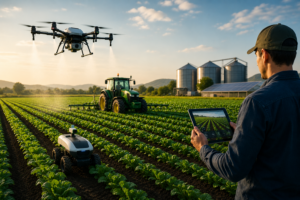
Agriculture is undergoing a major transformation as artificial intelligence (AI) becomes an essential tool for farmers around the world. In 2026, AI-powered technologies are helping improve crop yields, reduce waste, optimize resource use, and make farming more sustainable.
With growing global food demand, climate change, and labor shortages, farmers face increasing pressure to produce more food while protecting natural resources. AI provides innovative solutions by analyzing data, automating tasks, and delivering real-time insights that support better decision-making.
From drones that monitor crops to smart irrigation systems that conserve water, AI is reshaping modern agriculture. Whether managing a small family farm or a large commercial operation, farmers can use AI to improve productivity and reduce costs.
In this guide, we’ll explore how AI is transforming agriculture in 2026, the technologies driving smart farming, the benefits and challenges of AI adoption, and what the future holds for the agricultural industry.
Table of Contents
- What Is AI in Agriculture?
- Precision Farming
- AI-Powered Drones and Robotics
- Crop Monitoring and Disease Detection
- AI for Livestock Management
- Benefits and Challenges
- Future of Smart Farming
- Frequently Asked Questions
- Conclusion
What Is AI in Agriculture?
AI in agriculture refers to the use of artificial intelligence, machine learning, computer vision, and data analytics to improve farming operations. These technologies help farmers monitor crops, analyze soil conditions, predict weather patterns, detect pests, and automate routine tasks.
Instead of relying only on experience or manual observations, farmers can now use AI systems to collect and analyze vast amounts of agricultural data. This enables more accurate decisions that improve crop health, increase yields, and reduce the unnecessary use of water, fertilizers, and pesticides.
AI is becoming a key component of precision agriculture, where every farming decision is based on real-time data and advanced analytics.
Precision Farming
Precision farming is one of the most important applications of AI in agriculture. It allows farmers to manage crops with greater accuracy by using sensors, GPS technology, satellite imagery, and AI-powered software.
Rather than treating an entire field the same way, precision farming identifies differences in soil quality, moisture levels, and crop health. Farmers can then apply water, fertilizers, and crop protection products only where they are needed.
Benefits of Precision Farming
- Higher crop yields.
- Reduced fertilizer use.
- Improved water management.
- Lower production costs.
- Healthier crops.
- Reduced environmental impact.
By using resources more efficiently, precision farming helps increase profitability while supporting long-term environmental sustainability.
AI-Powered Drones and Robotics
Drones and agricultural robots are becoming increasingly common on modern farms. Equipped with AI-powered cameras and sensors, drones can quickly survey large fields, capture detailed aerial images, and identify areas that require attention.
Farmers use these drones to monitor crop growth, detect irrigation problems, identify pest infestations, and evaluate overall field conditions without walking through every acre.
How Agricultural Drones Help Farmers
- Monitor crop health.
- Detect pest outbreaks.
- Identify irrigation issues.
- Create detailed field maps.
- Track crop development.
- Support precision spraying.
Meanwhile, AI-powered robots are assisting with planting, harvesting, fruit picking, and weed control. These machines help address labor shortages while improving efficiency and reducing repetitive manual work.
Crop Monitoring and Disease Detection
One of the most valuable applications of AI in agriculture is continuous crop monitoring. AI-powered cameras, drones, satellites, and ground sensors collect real-time data about plant health, soil conditions, and environmental changes throughout the growing season.
Machine learning algorithms analyze this information to detect early signs of crop diseases, nutrient deficiencies, water stress, and pest infestations. Early detection allows farmers to take corrective action before problems spread, reducing crop losses and improving overall productivity.
AI Helps Farmers By
- Detecting plant diseases early.
- Identifying nutrient deficiencies.
- Monitoring crop growth.
- Predicting harvest readiness.
- Tracking weather impacts.
- Reducing unnecessary pesticide use.
By responding quickly to potential problems, farmers can improve crop quality while lowering production costs.
AI for Livestock Management
Artificial intelligence is also improving livestock farming. Smart sensors and wearable devices help farmers monitor the health, behavior, and productivity of animals in real time.
AI systems can detect changes in eating habits, movement, body temperature, and activity levels that may indicate illness or stress. This allows farmers to provide timely care, improving animal welfare and reducing financial losses.
AI Applications in Livestock Farming
- Health monitoring.
- Disease detection.
- Feed optimization.
- Breeding management.
- Milk production monitoring.
- Animal location tracking.
These technologies help farmers improve productivity while maintaining healthier livestock and reducing unnecessary veterinary costs.
Smart Irrigation Systems
Water conservation is becoming increasingly important as climate change affects rainfall patterns across many regions. AI-powered irrigation systems help farmers use water more efficiently by analyzing soil moisture, weather forecasts, crop requirements, and evaporation rates.
Instead of watering entire fields on a fixed schedule, smart irrigation systems deliver water only where and when it is needed. This reduces water waste while supporting healthier crop growth.
Benefits of Smart Irrigation
- Conserves water resources.
- Reduces irrigation costs.
- Improves crop health.
- Prevents overwatering.
- Supports sustainable farming.
Benefits of AI in Agriculture
Artificial intelligence offers numerous advantages that help farmers increase productivity while protecting natural resources.
1. Increased Crop Yields
AI helps farmers make informed decisions that improve crop performance and maximize harvests.
2. Lower Production Costs
By optimizing the use of water, fertilizers, pesticides, and labor, AI reduces unnecessary expenses.
3. Better Resource Management
AI enables more efficient use of land, water, fuel, and agricultural inputs.
4. Improved Sustainability
Precision farming reduces chemical usage and minimizes environmental impact while supporting long-term agricultural productivity.
5. Faster Decision-Making
Real-time data allows farmers to respond quickly to changing weather conditions, disease outbreaks, and market demands.
Real-World Applications of AI in Agriculture
AI technologies are already helping farmers around the world modernize agricultural operations.
- Autonomous tractors and farm equipment.
- Drone-based crop inspections.
- Satellite crop monitoring.
- Precision fertilizer application.
- Automated greenhouse management.
- Livestock health monitoring systems.
- Harvest prediction software.
- Agricultural supply chain optimization.
These practical applications demonstrate how AI is making farming more efficient, productive, and environmentally responsible while helping meet the growing global demand for food.
Challenges of AI Adoption in Agriculture
Although artificial intelligence offers enormous potential for modern farming, its adoption also comes with several challenges. Farmers, agribusinesses, and policymakers must address these issues to ensure AI technologies are accessible, reliable, and beneficial for farms of all sizes.
1. High Initial Investment
AI-powered drones, sensors, robots, and smart farming equipment can require significant upfront investment. While costs are gradually decreasing, affordability remains a challenge for many small-scale farmers.
2. Internet Connectivity
Many AI systems depend on reliable internet access and cloud-based services. In rural areas with limited connectivity, farmers may face difficulties using advanced agricultural technologies effectively.
3. Technical Skills
Farmers and agricultural workers may require training to understand AI software, interpret data, and operate smart farming equipment efficiently. Education and support programs are essential for successful adoption.
4. Data Security
AI platforms collect large amounts of agricultural and operational data. Protecting this information from unauthorized access is important for maintaining privacy and business security.
5. Equipment Maintenance
Smart farming technologies require regular maintenance, software updates, and technical support to continue operating efficiently throughout the farming season.
The Future of Smart Farming
The future of agriculture is becoming increasingly data-driven. As AI technologies continue to improve, farms are expected to become more connected, automated, and sustainable.
Future innovations may include autonomous tractors that operate with minimal human supervision, AI systems that accurately predict crop diseases weeks before symptoms appear, and robotic harvesters capable of working around the clock with remarkable precision.
Artificial intelligence is also expected to play a major role in improving global food security by helping farmers produce more food while conserving water, reducing waste, and protecting natural ecosystems. Combined with satellite monitoring, climate forecasting, and precision farming techniques, AI will continue transforming agriculture for generations to come.
Frequently Asked Questions (FAQs)
1. What is AI in agriculture?
AI in agriculture refers to the use of artificial intelligence, machine learning, sensors, drones, and data analytics to improve farming decisions, increase crop yields, and optimize resource management.
2. How does AI help farmers?
AI helps farmers monitor crops, detect diseases early, optimize irrigation, manage livestock, predict harvests, and automate repetitive farming tasks.
3. Can AI reduce farming costs?
Yes. AI improves efficiency by reducing unnecessary use of water, fertilizers, pesticides, fuel, and labor while increasing productivity and minimizing waste.
4. Are drones part of AI-powered farming?
Yes. AI-equipped drones capture aerial images, monitor crop health, detect irrigation problems, identify pest infestations, and assist with precision agriculture.
5. Is AI suitable for small farms?
Many affordable AI solutions are becoming available for small and medium-sized farms. Farmers can begin with basic technologies such as smart irrigation systems or crop monitoring apps before expanding to more advanced solutions.
6. What is the future of AI in agriculture?
The future includes autonomous farming equipment, smarter disease detection, precision harvesting, improved climate forecasting, and highly efficient food production systems that support sustainable agriculture.
Conclusion
Artificial intelligence is revolutionizing agriculture by helping farmers make smarter decisions, improve crop yields, optimize water usage, monitor livestock, and reduce production costs. Through technologies such as drones, sensors, robotics, and predictive analytics, AI is making farming more productive and environmentally sustainable.
While challenges such as investment costs, technical training, and internet access remain, continued innovation is making AI increasingly accessible to farms of all sizes. As global food demand continues to grow, AI will play a critical role in supporting efficient and sustainable agricultural practices.
Farmers who embrace AI-powered technologies today will be better positioned to improve productivity, adapt to changing climate conditions, and contribute to a more secure global food supply.
Final Thoughts
Artificial intelligence is shaping the future of agriculture by combining technology with traditional farming knowledge. Rather than replacing farmers, AI empowers them with better information and smarter tools to make informed decisions every day.
As smart farming continues to evolve, AI will help create a more resilient agricultural sector capable of feeding a growing population while protecting the planet’s natural resources. The farms of tomorrow will rely not only on hard work but also on intelligent technology that makes agriculture more efficient, profitable, and sustainable.
About The Author